
History & Mission
Serving Children Since 1957
For decades, Harwood Center has evolved to meet the unique needs of generations of children and their families in the Memphis area.
Enabling Full Potential
Hugs, Hope, Help
Harwood Center, Inc. is a non-profit organization that has served children with special needs and their families in the Greater Midsouth since 1957.
Although our name and address have changed over the years, our mission has always been the same: to help children with special needs reach their full potential.
It all started in 1957, when two different groups of people sought to accomplish this same objective in two different ways:
- LeBonheur Children’s Hospital, in collaboration with the University of Tennessee College of Medicine, started an out-patient diagnostic clinic for children with developmental disabilities. This diagnostic center, sponsored by the Tennessee State Department of Health, was directed by Dr. Robert Jordan and served children from West Tennessee, Northern Mississippi, and Eastern Arkansas.
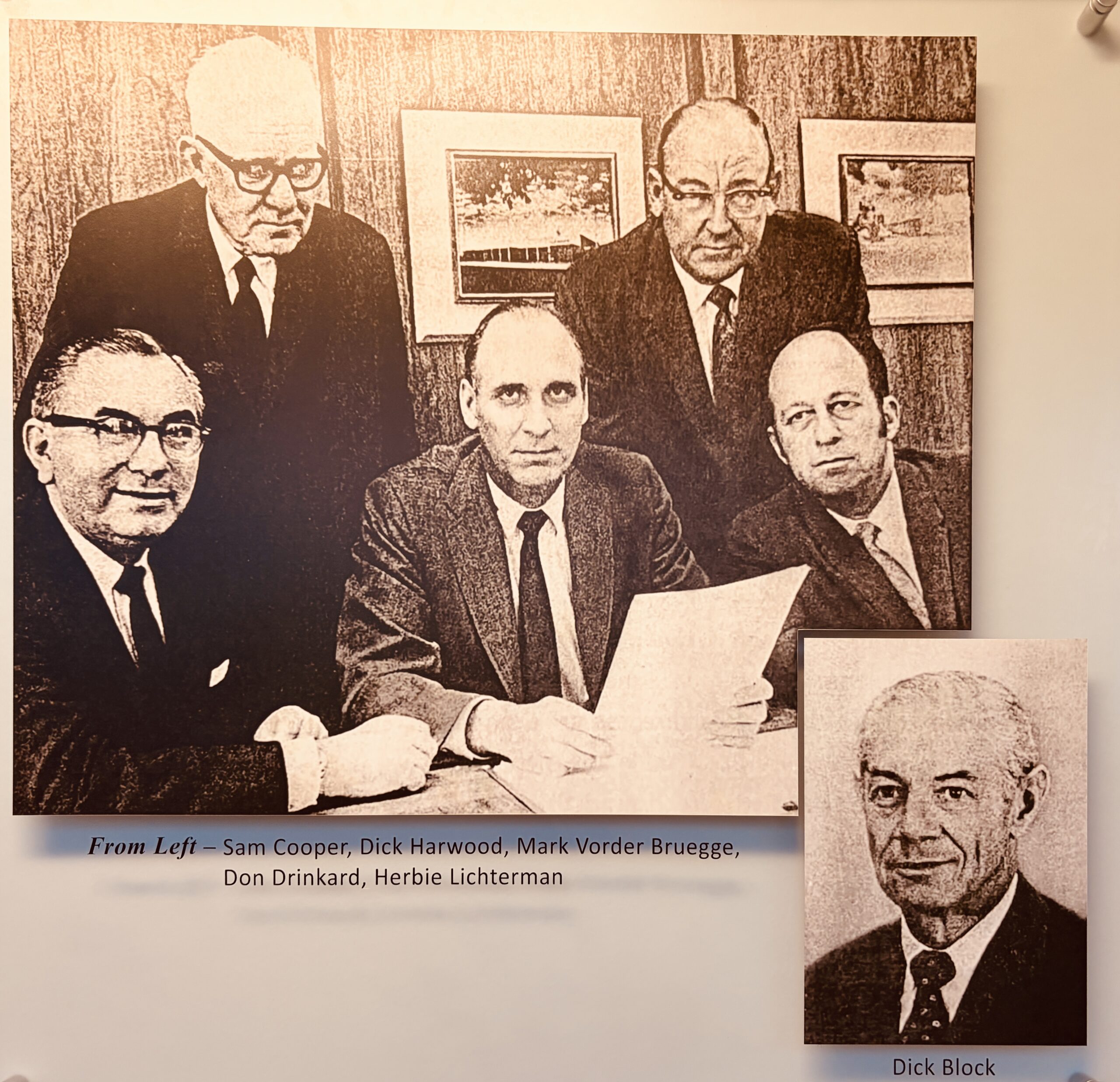
- The very same year, a local Memphis Chapter of the national non-profit organization, the United Cerebral Palsy Association, was chartered. Among its board members were parents of children with developmental disabilities like Denby Brandon and local philanthropists like Herbert Lichterman and Sam Cooper. Their primary objective was to establish a daycare center to care for children with cerebral palsy.
Established in Memphis
A Legacy of Care
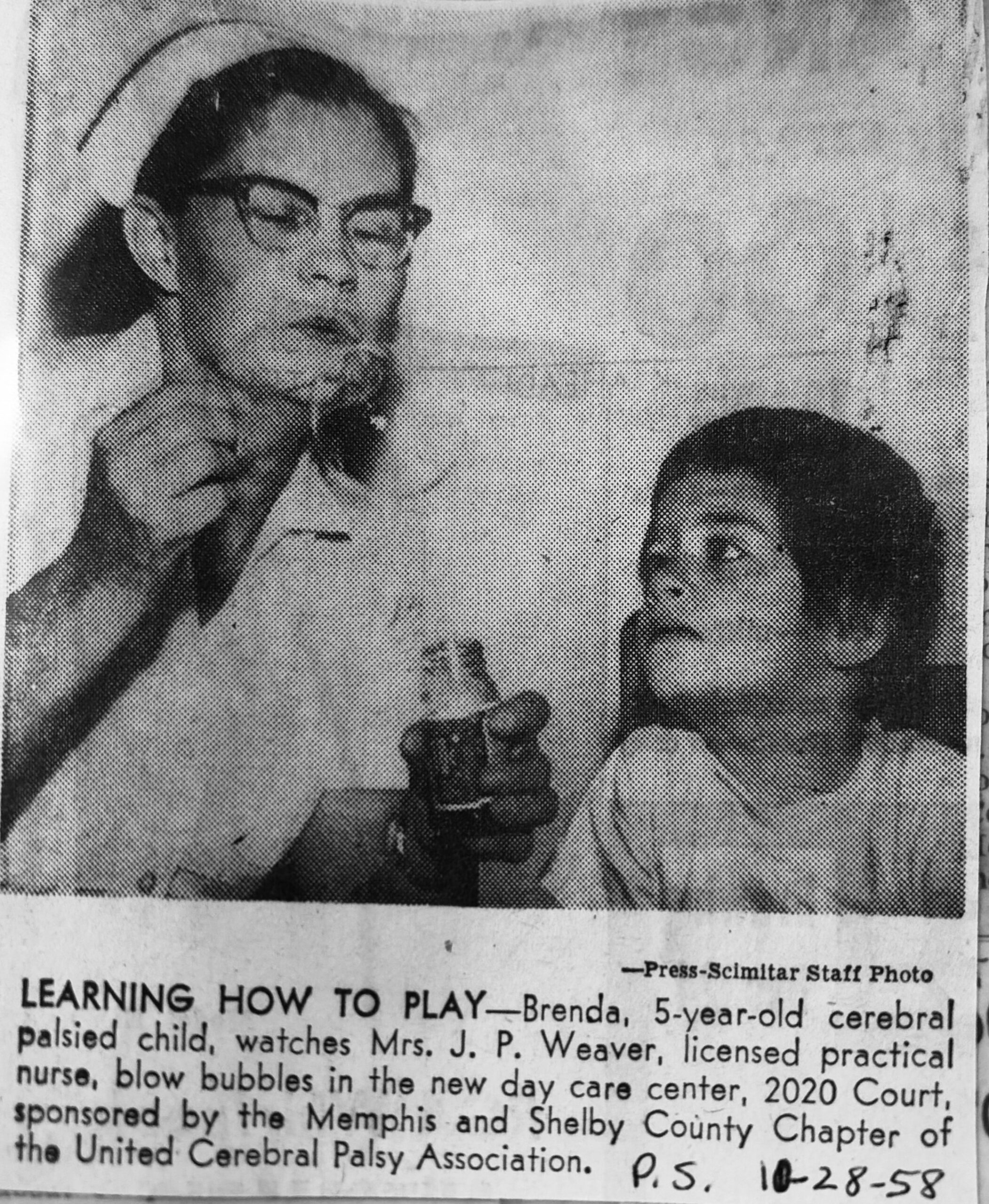
The Diagnostic Clinic provided families with the first step in early intervention: identification. Meanwhile, the Daycare provided families with a centralized location to receive care and services their children needed.
Over time, these two separate movements became increasingly more intertwined. Two separate perspectives addressing the same population: On one hand, clinical expertise; on the other, classroom experience in education. Ultimately, it would take both to truly make a meaningful difference in these children’s lives.
But neither the clinic nor the daycare could survive without the support of the community. The Clinic received competitive federal and state grants while the Daycare received overwhelming community support through donations.
Local support and community partnerships greatly increased the impact these two forces were able to have on this population. Churches like First Congregational Church hosted fundraisers. The Jewish Community Center offered a wing of its facilities rent-free for the daycare. Allen Brothers Construction Company and Hanker & Heyer architecture firm donated their services for renovation.
Adapting to Generational Needs
The Future of Harwood Center
In addition to these entities, individual volunteers also donated their time to help raise the money needed to turn what used to be a women’s locker-room at the Jewish Community Center into a space for children to grow and learn. On more than one occasion, 5,000 women volunteered to march throughout Memphis and Shelby County, going door to door to raise money to build the Daycare.
When the Daycare first opened, it was called “Shady Elm Hall.”
Public support has taken many forms over the years.
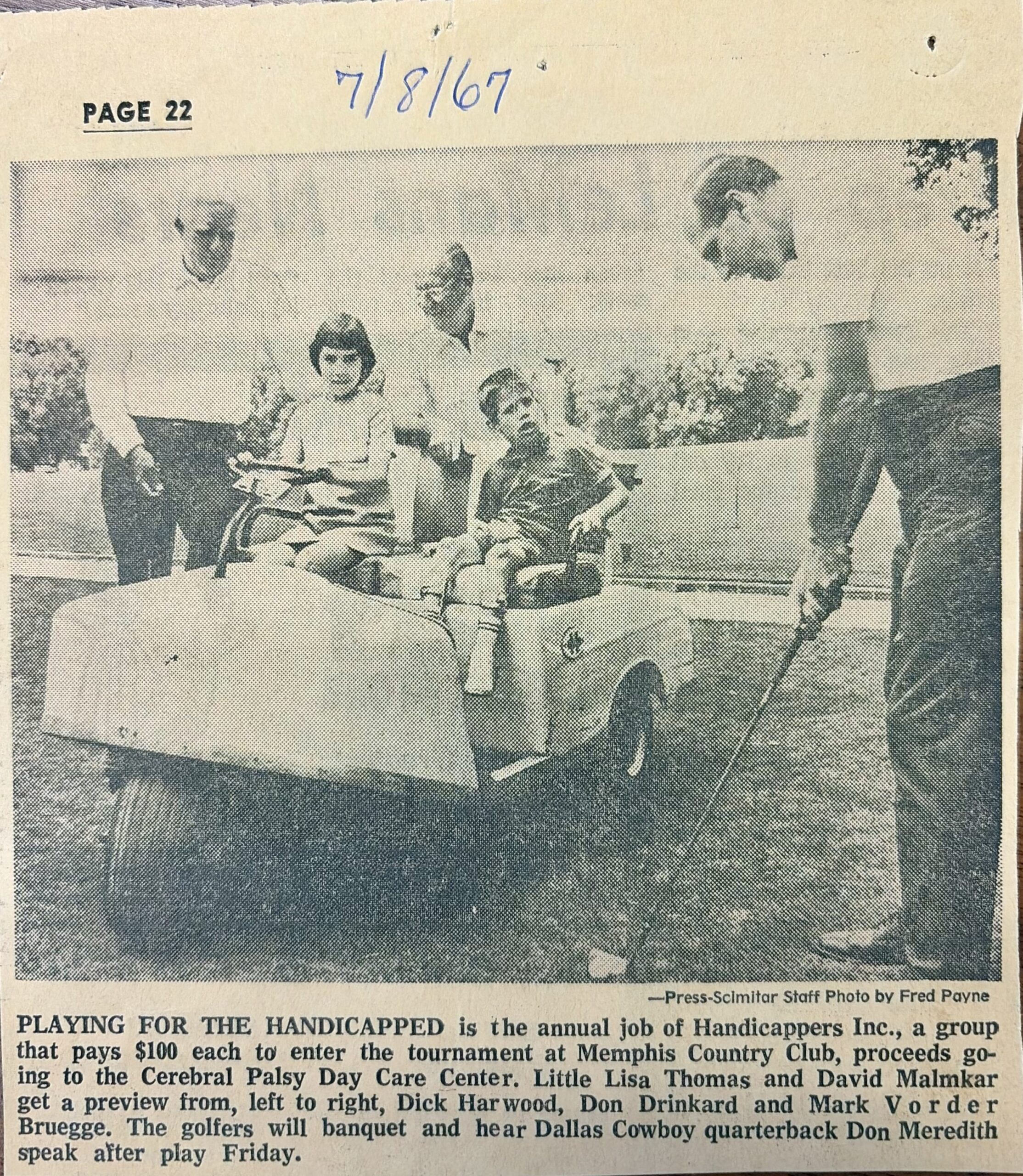
In 1959, Memphis Handicappers, Inc. registered its initial charter. Many of the members of their board were also members of the Memphis and Shelby County Chapter of United Cerebral Palsy.
- That September, Handicappers, Inc. sponsored a golf tournament whose profits went to support Shady Elm Hall. This was the first of what would become what is now today the longest-running charity golf tournament in Memphis. Handicappers, Inc. continued to raise funds and provide support for the Daycare to maximize their capacity to reach children for decades.
Also organized around 1959, Cer-Pals served as the dedicated women’s auxiliary to the Memphis and Shelby County Chapter of the United Cerebral Palsy Association. Mary Lou Garber, the wife of the daycare's executive director Elvern Garber, was instrumental in organizing the group and served as its secretary.
As the daycare at Shady Elm Hall expanded its enrollment and its programming, this group of women stepped in to provide the essential volunteer labor required to keep things running smoothly.
By 1962, both the UCPA Day Care Center and the newly renamed Child Development Clinic were facing severe space limitations.
Recognizing their shared program needs, the UCPA proposed a joint solution to the University of Tennessee (UT) Medical Units to build a combined facility together.
The culmination of this partnership was a state-of-the-art, $5.5 million, seven-story Child Development Center located at 711 Jefferson Avenue, which officially opened in 1970. Through a verbal agreement between the two entities, UT owned the building and administered the daycare program, while the UCPA Day Care Center was granted a prominent, 5,000-square-foot space on the first floor to continue its daily operations and serve as an exemplary training program for UT students.
By providing direct services to the children while simultaneously training more professionals to provide those services, they were able to further their mission in an exponential way.
In September 1978, the Board of Directors for the daycare center voted to officially become an independent agency. To do so, they secured a new charter through their longtime financial supporters, Memphis Handicappers, Inc., and officially changed their name to the “Handicappers, Inc. Day Training Center.”
However, this new name did not last long. Parents of the enrolled children expressed concern that the term "Handicappers" would place an unnecessary and unfair label on their children.
In response, the Board decided to re-charter the organization in March 1981 to change the name once again to the "Evan R. Harwood Day Training Center." This new title honored Evan (affectionately known as "Woody") Harwood, the daughter of Richard D. Harwood. Richard was a long-time board member, a key figure in the Handicappers charity golf tournaments, and a dedicated advocate whose daughter had been born with cerebral palsy and was involved in the early history of the program. As a recipient of early intervention services who went on to live a very full and productive life, she was the perfect namesake for a Center whose mission is to help children with disabilities reach their maximum potential.
In 1992, our name was shortened to the "Harwood Training Center, Inc." and finally, in 1997, to "Harwood Center, Inc.," which is still our name today.
Over time, the organization now known as Harwood Center, Inc. has provided a variety of necessary medical and educational services to children in the Midsouth as the needs of those children have evolved over time. As their needs have evolved, Harwood Center, has always adapted to meet them through partnerships with organizations like Les Passes, local places of worship, businesses, schools, and universities.
Today, Harwood Center still has the same mission it always has: helping children with special needs reach their full potential. Now operating on the University of Memphis’s Park Avenue Campus, Harwood Center provides early intervention therapy services to children aged 18 months -8 years old with developmental disabilities, including speech and language therapy and Applied Behavioral Analysis (ABA).